






 Help Center
Updated on 2026-07-03
views
5min read
If you have accidentally deleted critical text messages from your iPhone, time is of the essence. Before attempting any complex recovery procedures, you must conduct a rapid assessment.
To maximize the probability of data retrieval, you should prioritize two initial actions: checking the local "Recently Deleted" folder on your iPhone and verifying the existence of a recent backup. Once you have assessed these two areas, you can confidently execute the recovery method that best aligns with your current technical environment.
Below, we have compiled a diagnostic checklist followed by a detailed, step-by-step guide to help you retrieve deleted text messages on your iPhone.
The Rapid Diagnostic Checklist
- Check the "Recently Deleted" Folder: iOS retains all deleted messages in this directory for 30 days. You can simply select the desired messages and tap "Recover." If 30 days have passed, or if you manually emptied this folder, you must attempt alternative methods.
- Check for iTunes/Finder or iCloud Backups: Verify if your iPhone data is routinely backed up.
- If you have a local iTunes/Finder backup on your computer: Verify the timestamp of your last backup. If you possess a backup created before the text message was deleted, you can restore it. But this will replace everything currently on the phone with the contents of that backup; essentially, it will revert the phone entirely to the exact state it was in at the time the backup was generated.
- If you have enabled iCloud backup and have "Messages in iCloud" Sync enabled: Immediately check any other Apple devices logged into the same Apple ID (such as an iPad or Mac). If they have not synced the deletion yet, disconnect them from Wi-Fi/Internet immediately; the messages may still reside there. Next, check your iCloud sync timestamp. If the sync occurred after you deleted the message, there is no way to recover it via cloud sync. If the sync occurred before the deletion: Try toggling "Messages in iCloud" to OFF, selecting "Disable and Download Messages," and then toggling it back ON to force a fresh re-sync from the cloud.
- If you have enabled iCloud backups but "Messages in iCloud" is OFF: Verify the backup timestamp. If the backup predates the deletion, you can restore it. Again, this will overwrite all current data on the device.
- If you do not have any iTunes or iCloud backups: You will need to utilize specialized iPhone data recovery software. Crucial rule: Immediately stop using your iPhone. Do not take new photos, download applications, or generate new data. Continuing to use the device increases the risk of overwriting the deleted message data, rendering it permanently unrecoverable. The sooner you run a recovery scan, the higher your probability of success.
Detailed Guide to Retrieve Deleted Text Messages on iPhone
Below are the specific execution steps for the 5 recovery methods, categorized into progressive phases. Please carefully review the "Best For" and "Risk" parameters to avoid accidental data overwriting.
Phase 1: Check the "Recently Deleted" Folder
Best For: Messages deleted within the last 30 days, provided you have not manually cleared the folder.
Success Rate: Extremely High (100% complete recovery with zero risk of overwriting current device data).
Steps:
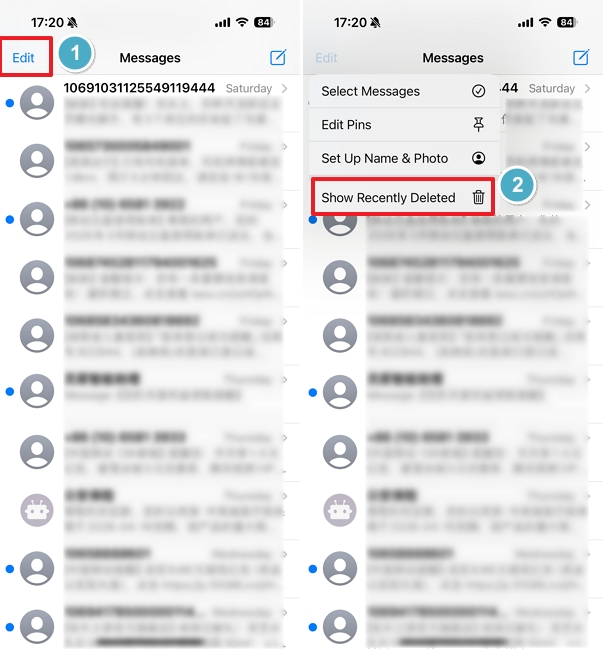
1. Open the Messages app on your iPhone.
2. Tap Filters or "Edit" in the top left corner.
3. Select Recently Deleted.
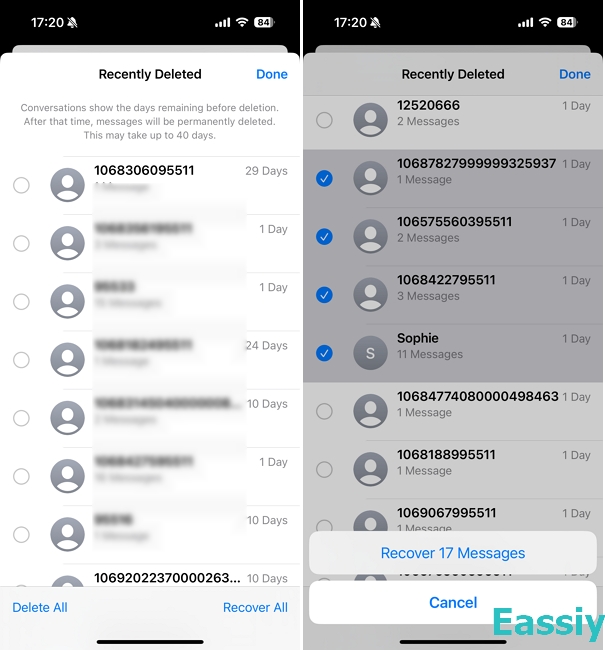
4. Check the circles next to the text conversations you wish to retrieve.
5. Tap Recover in the bottom right corner.
Phase 2: Verify If You Have Made Any Backups
If the messages are not in the "Recently Deleted" folder, your next phase is utilizing Apple's official backup ecosystem.
Before executing a full system restore (which carries heavy data overwrite risks), you must spend five minutes confirming whether a viable backup actually exists. If a valid backup exists, the recovery success rate is 100%.
How to Check If You Have an iCloud Backup
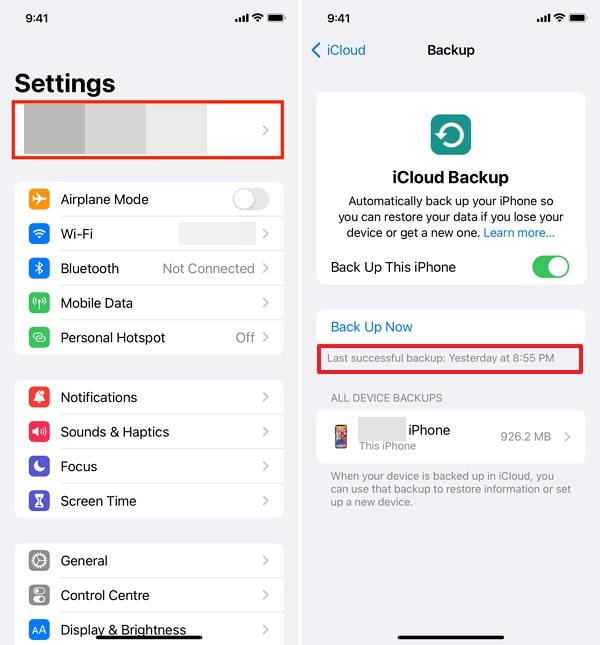
Go to Settings > tap your Apple ID Profile Name at the top > iCloud > iCloud Backup. Look at the "Last successful backup" timestamp at the bottom of the screen. If this time is earlier than when you deleted the messages, they are likely secured in the cloud.
How to Check If You Have a Local Computer Backup
Windows Users: Open iTunes, click the small iPhone icon in the top left, and look at the "Latest Backup" time under the "Summary" tab.
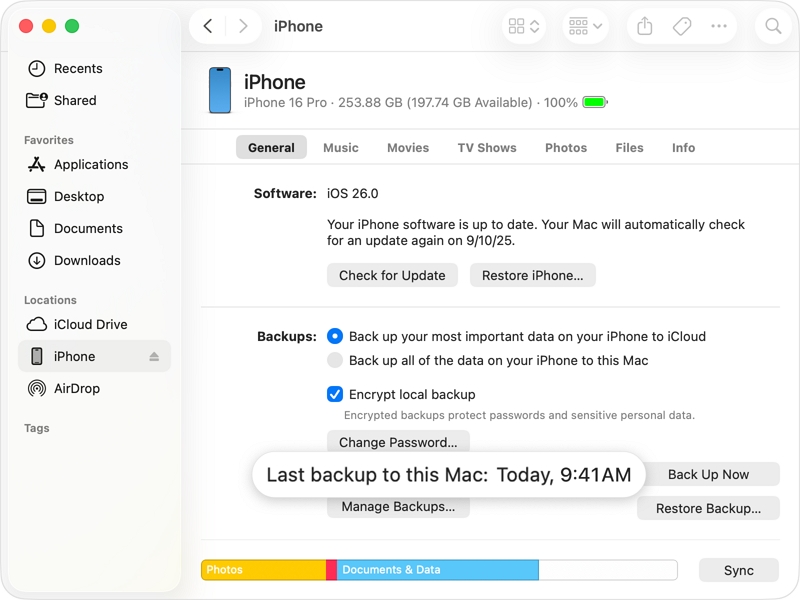
Mac Users: Open Finder and connect your iPhone to the computer. Once recognized, click your iPhone in the left sidebar. Under the "General" tab, look at the "Latest Backup" time in the Backups section.
Once you have verified a valid backup exists, choose restoring from an iCloud or a computer backup.
Restore iPhone Entirely from an iCloud Backup
Best For: Messages deleted over 30 days ago (or manually cleared), where the iCloud backup predates the deletion.
Success Rate: High.
Warning: This operation will overwrite all existing data on the phone. Any new data generated after the backup was made (such as newly taken photos, new apps, or recent texts) will be permanently erased. You must create a temporary local backup of your current state before proceeding. Alternatively, if you own a spare Apple device, we highly recommend restoring the old iCloud backup onto the spare device to protect your primary phone's current data.
Note: iCloud typically saves only one backup per device (the most recent one). Each new backup automatically overwrites the previous version for that specific iPhone, ensuring you do not have multiple daily or weekly versions stored.
Steps:
- Go to Settings > Apple ID > iCloud > iCloud Backup. Ensure the "Last successful backup" time is earlier than your deletion time.
- To archive your current files and prevent iCloud from automatically overwriting the old backup, manually back up your current iPhone data to a computer.
- Go to Settings > General > Transfer or Reset iPhone.
- Tap Erase All Content and Settings.
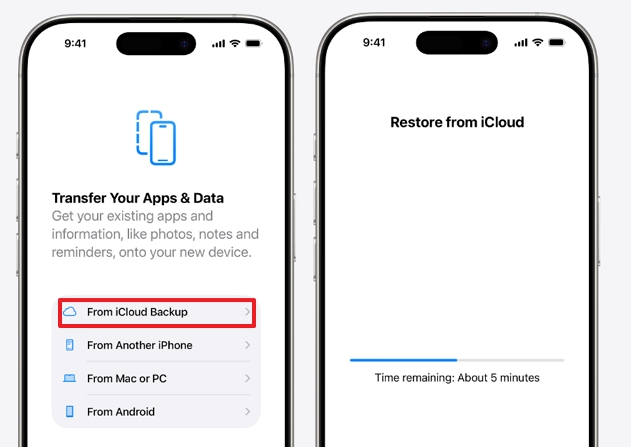
- Once the phone restarts and displays the "Hello" screen, follow the setup prompts until you reach the "Apps & Data" screen.
- Select Restore from iCloud Backup.
- Sign in with your Apple ID.
- From the list of available backups, specifically choose the backup file dated before you deleted the text messages.
- Wait for the progress bar to complete. Your deleted messages will be restored to the device.
Restore iPhone from a Computer (Finder/iTunes) Backup
Best For: Users who lack iCloud space but have previously backed up their device to a computer via a USB cable.
Success Rate: High.
Warning: Similar to iCloud, this overwrites current data. Any new data generated after the backup was made will be lost. You can try to create a temporary new backup first, or restore to a spare Apple device.
Steps:
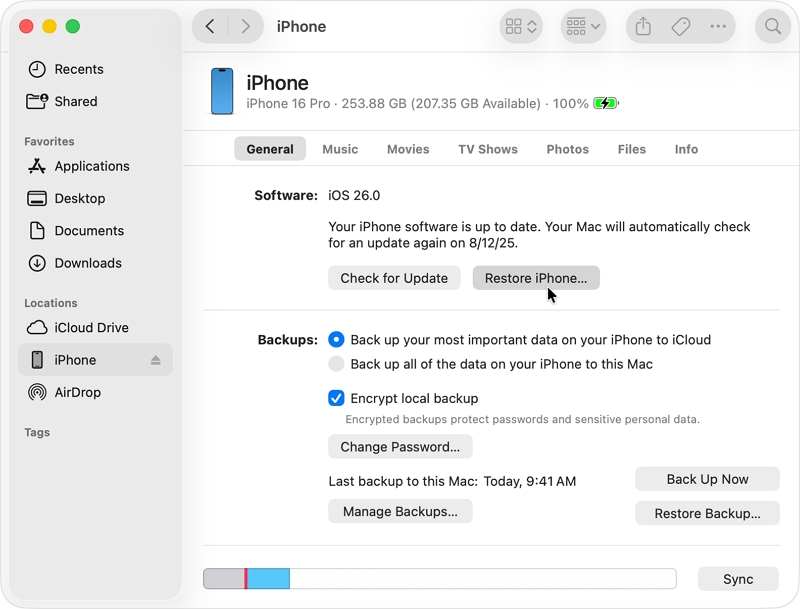
- Manually back up your current phone state (click "Back Up Now" on your computer).
- Connect your iPhone to the computer via a USB cable and open Finder (Mac) or iTunes (Windows).
- Click your iPhone icon. Under the "General" or "Summary" tab, check the "Latest Backup" time to ensure it predates your deletion.
- Click the Restore Backup button.
- In the pop-up window, select the older backup based on the date.
- Click Restore and wait for the iPhone to restart and sync.
Phase 3: Using Software Recovery (No Backup Required)
Best For: Users who have no backups, cannot find the texts in "Recently Deleted," and consider the lost data highly critical.
Success Rate: Approximately 80%-90% if the phone has not been heavily used since the deletion. The probability decreases significantly as more time passes.
When you delete a text message without a backup, the iOS system does not instantly wipe the raw data. Instead, it marks the physical storage space occupied by that message as "Available" for overwrite. Until new data is written to that specific sector, the original data still physically exists on the flash memory. Recovery tools scan the file system for residual metadata to reconstruct and extract these files.
The optimal method to retrieve deleted text messages without a backup is utilizing powerful data recovery software. Eassiy iPhone Data Recovery is an industry-tested tool with over a decade of diagnostic experience. It utilizes advanced recovery algorithms, multiple recovery modes, and deep scanning capabilities to maximize extraction success.
Unlike official iTunes/iCloud restores, it does not overwrite your current phone data and allows for the selective recovery of just text messages. It is specifically engineered with an intuitive interface for non-technical users and supports the recovery of over 36 distinct file types.
Why Choose Eassiy:
- Maintains an industry-leading data recovery success rate.
- Engineered for complex data loss scenarios (accidental deletion, system crashes, water damage, iOS upgrade/downgrade failures, factory resets, broken screens, and malware attacks).
- Supports 36+ file types, encompassing photos, music, videos, documents, and messaging data.
- Extracts data directly from iOS devices, or safely extracts targeted files from iCloud and iTunes backup packages.
- Fully compatible with all iOS devices and operating system versions.
Note: Due to the intensive nature of deep metadata scanning, the software consumes significant system resources, which may temporarily slow down your computer's processing speed during operation.
Steps:
- Download, install, and launch the Eassiy iPhone Data Recovery software on your Windows PC or Mac.
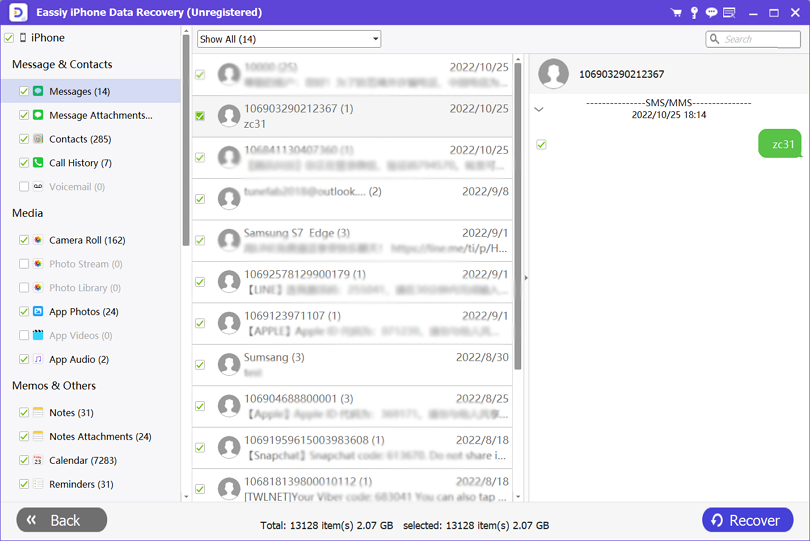
- Connect your iPhone via a USB cable, select the Recover from iOS Device mode, and click the arrow button to proceed.
- Switch to the Messages tab on the left sidebar. This restricts the scan parameters specifically to deleted text messaging data.
- Once the scan concludes, all recoverable text conversations will be rendered on the screen. To retrieve the data, simply check the corresponding items and click either Recover to Computer or Recover to Device.
Phase 4: Check Message Records from Your Carrier
If local, cloud, and software methods fail, you can attempt carrier retrieval. For example, according to official responses within the Verizon community, users can retrieve up to 90 days of text message records through the My Verizon portal.
However, you can only view the metadata (date, time, and the phone numbers involved); you cannot see the actual text content of the messages.
Here's how to check Verizon logs:
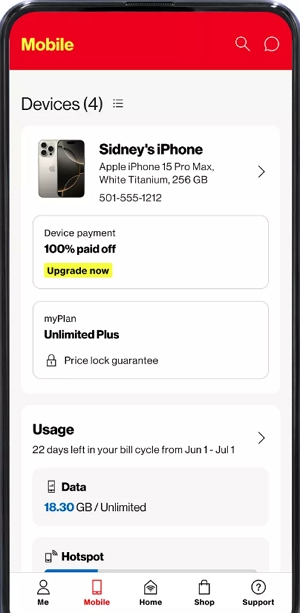
- log in to the My Verizon app or website.
- Click on Account at the top menu, then select Usage.
- Select the Usage overview option.
- A section titled "My Usage" will open.
- Select the specific phone line you wish to view. (Note: Only designated Account Owners or Managers can view logs for other lines on the plan, and content is never revealed).
- On the selected line, locate the Talk & Text box detailing the current billing cycle.
- Click the Message details button at the bottom of the box. You will see a comprehensive message log categorized by type (All, Domestic, International, Global). This log displays dates, times, sender/receiver numbers, and receipt status.
FAQs
1. How can I get back iPhone text messages that I accidentally erased without a backup?
If you have no backup files, your absolute final resort is either to use iPhone recovery tools such as Eassiy or contact your cellular provider. Depending on regional regulations, some carriers may retain encrypted copies of SMS messages on their internal servers for a limited period, though access usually requires legal or administrative authorization.
2. When an iPhone message is deleted, where does it go?
Deleting a text message on an iPhone does not render it instantly unrecoverable. Initially, the message transmission is logged by the service provider. Locally on the device, the iPhone's internal SQLite database simply alters the metadata, marking the file's occupied space as "deleted" (available for overwrite) rather than actively erasing the binary data.
4. Will restoring an iCloud or iTunes backup delete my new data?
Yes. Restoring an official Apple backup is an "all-or-nothing" procedure. Your iPhone will be reverted entirely to its exact state at the moment that specific backup was generated. Any new data created after the backup timestamp—including new photos, recent text messages, and application data—will be permanently overwritten and lost. To avoid this secondary data loss, you must either create a temporary local archive of your current files on a computer before restoring.
Conclusion
Losing text messages is stressful, but you possess multiple viable recovery options. Even if you have permanently erased the messages from the iPhone's interface, the underlying data can be retrieved. Evaluate your backup status and select the method that aligns with your technical constraints and data preservation needs.
Restoring from an iTunes or iCloud backup remains the most convenient official option, provided you accept the data overwrite parameters. However, comprehensive diagnostic programs like Eassiy iPhone Data Recovery enable you to recover deleted messages without risking your current device state. Choose the methods that best fits your situation, and proactively enable automated backups to secure your data against future loss.